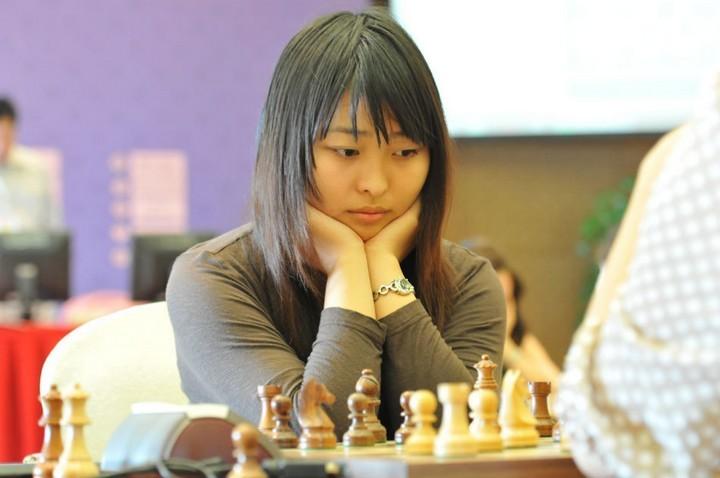
Ju Wenjun
Those of you impatient for a first win for either player in the World Championship match between Carlsen and Caruana in London may be interested in the other World Championship final currently taking place in Siberia.
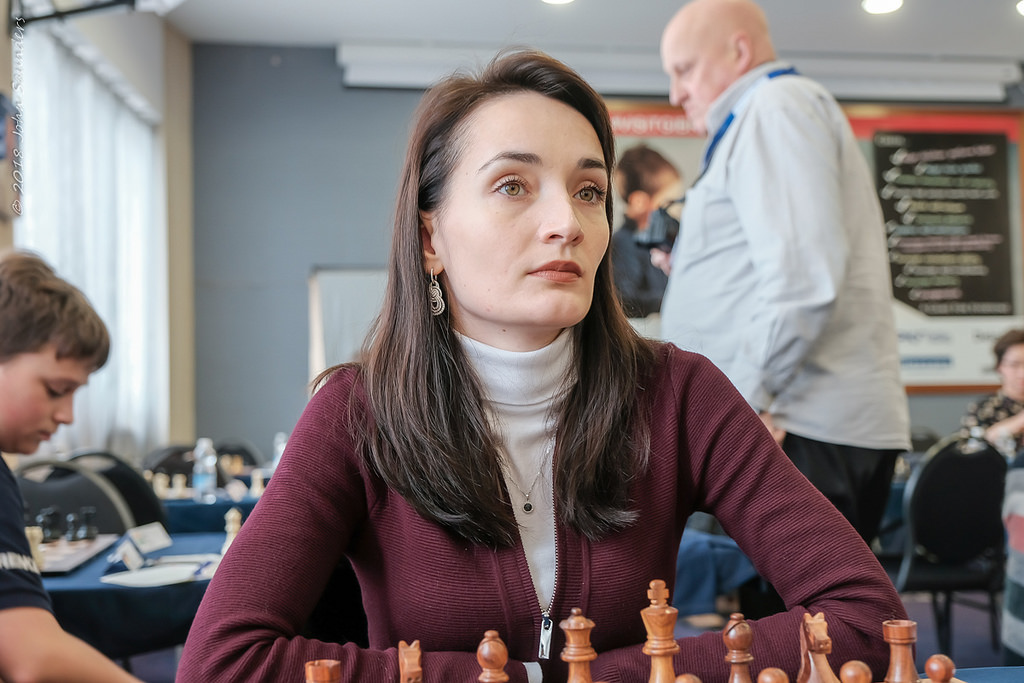
Kateryna Lagno
This is the women’s World Championship which follows a slightly different pattern to the men’s. It’s a knockout competition, initially with 64 players and we are now down to the final two: GM Ju Wenjun of China, the current World Champion, and GM Kateryna Lagno of Russia. (The world number 1, Hou Yifan, a favourite of Broadstairs Chess Club, is currently taking time out of chess to pursue a course at Oxford University.) Those people looking for gender equality in prize money should look away now – while the winner in the men’s competition will walk away with one million euros, the entire prize fund for the women’s tournament is $450,000 with the winner getting a mere $60,000. It must be worth an invite to the 50th Thanet Congress next August. Incidentally, the topic of women (or lack of) in chess is discussed in a Guardian article (click here.)
One last difference between the finals is the length: while Carlsen and Caruana are battling it out for twelve games + the possibility of tie breaks (rapid plays, blitz games and eventually armageddon), the women will only have four classic games + tie breaks if necessary. In such a short final, there is little margin for error as Ju Wenjun found out in Game 2 played today. No rest days for the women – Game 3 is tomorrow and Game 4 if needed on Thursday.
White: Kateryna Lagno (2556) Black: Ju Wenjun (2568)
2018 FIDE Women’s World Championship Game 2
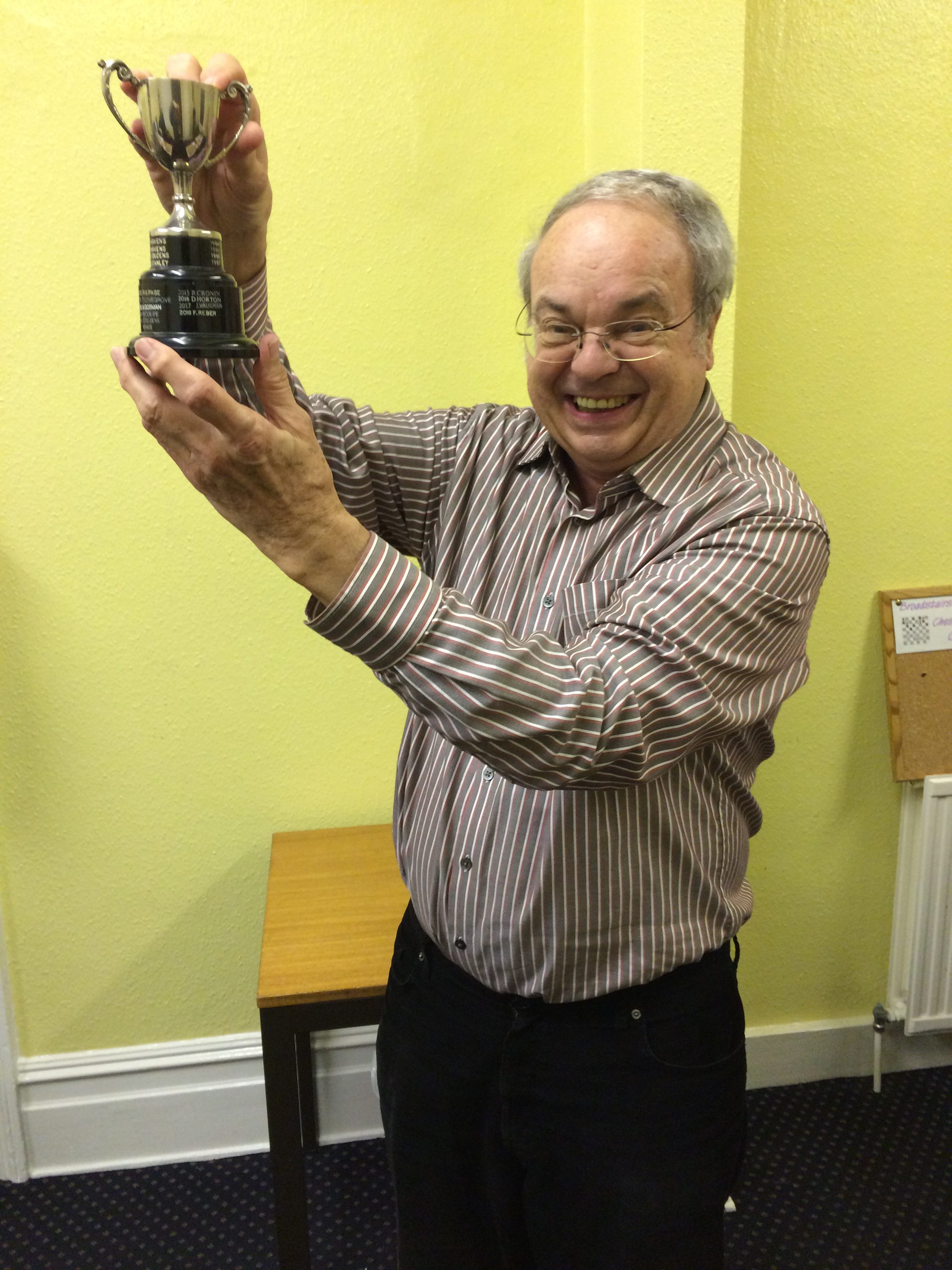 Here is a delighted Fredy Reber holding aloft the George Stiggers Trophy with which he has belatedly been presented. The trophy is awarded for the most improved player during the previous season based on the change in grades from July to July. Normally it goes to a player whose grade has gone up by about 5-10 points and at the AGM when the trophy is usually presented, this appeared to be the case with two players in the running whose grades had increased by nine points. Fortunately, the trophy was not awarded at the time because of an error with the ECF grading list for July which affected several players in the club. As this might result in changes to existing grades, it was decided to wait until the ECF managed to sort it out before awarding the trophy.
It was only after the AGM that it was noticed that inexplicably Fredy had somehow been overlooked and not only was his grade improvement higher than nine points but it was a massive 30 points, making him almost certainly the most improved player since the trophy was first awarded. Having established the error, we then had to wait several more weeks until the engraver could return from holiday to complete the job. Finally, over two months later than scheduled, Fredy got his hands on the trophy and no wonder he looks happy. He then made a moving speech saying how he never imagined he would receive such a trophy when he joined the club two years ago.
George Stiggers, after whom the trophy was named, was a stalwart of Broadstairs Chess Club for many years and served as both Secretary and Treasurer from 1950 until his death in 1993. He captained the Millar Cup team – then the only league competition – and ran the club virtually single-handed. The trophy was created in his memory and has been won by many members of the club over the years. Well done, Fredy!
 Recognise this extraordinary logo? Well, for the benefit of anyone who has been visiting Planet Zog recently, the World Chess Championship Final between Magnus Carlsen and Fabiano Caruana begins today in London. The logo chosen for the match has not been seen much since the fanfare of its unveiling when the match was announced earlier this year. It attracted a fair amount of interest at the time and led The Times to describe the match as The Pawnographic World Chess Championship. Perhaps the inspiration for the logo was the famous (notorious?) chess game between Steve McQueen and Faye Dunaway in The Thomas Crown Affair.
The match consists of twelve games and if the scores are tied at 6-6 then a tie break ensues, details of which can wait until necessary. What are the odds of Carlsen retaining his title? While his FIDE rating is only three points higher than his opponent, the consensus seems to be that it would be a major surprise if he were to lose, especially as his quick play is superior to Caruana’s if the match were to go to a tie break. So what are Caruana’s chances? Searching for ‘World Chess Championship odds’, I was directed to the headline ‘What are the odds that chess is sexy enough for sports betting?’ from an American site www.thelines.com. (What do you mean, ‘No surprise there then?’). It quotes Unibet as claiming the ‘betting handle’ on the contest to be higher than that of some 2018 FIFA World Cup Matches. Really? Morocco v Iran, perhaps. It goes on to quote Carlsen as 29/50 and Caruana as 7/25. You don’t get odds like that at Ascot.

The ‘sexy’ aspect of the article is clear when you look at the logo but FIDE have offered an alternative ‘traditional’ one which seems even stranger. To this writer it looks more like a game of Chess Twister which could be the must have game for Christmas. The article states that ‘Chess is not noted for being a sexy sport’. Clearly the writer has not visited Broadstairs Chess Club. Unfortunately, his credibility went out of the window when the final paragraph announced that the match will take place in the Victoria and Albert Museum.
In fact, the venue is The College in Holborn, an apparently odd choice as while its website claims that there will be space for 400 spectators, Malcolm Pein in The Telegraph today said that there will only be approximately 160 seats for paying customers, the rest presumably for press and officials. As for the building, it is indeed Victorian as claimed but photos suggest to this reader a cross between Victorian baths and a school hall. See what you think here.
Enough of this, you say, what about the chess? Well, Caruana drew the white pieces for Game 1 but was he able to take advantage? Surely he could not allow Carlsen to win the first game with black? At one point the computer had Carlsen as winning but he blundered and after seven hours there is still no result. While it was hoped to be able to post the game here for everyone to admire (?), with 111 moves played and no result in sight, we shall have to wait until tomorrow. The online wags are having a field day. “I live in Toronto,” says one. “The game started as I arrived at work. I am now leaving and it is still going on.” Another suggested that the game will still be continuing when round two begins tomorrow while a third has tipped Carlsen to win in 700 moves. The 30-second increment added per move means this game could run and run. Hold it….pawns have been swapped off so that’s another 50 moves….zzzzz….no, wait – draw agreed! As the players leave the stage, you can imagine the resident DJ playing ‘Things can only get better’.
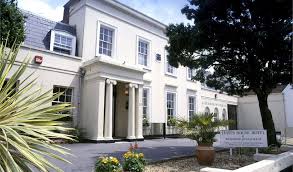
This fine building is the Lysses House Hotel in Fareham, venue for the 2018 Hampshire Chess Congress which took place last weekend. The High Street in which the hotel is situated is an impressive road with some imposing Georgian buildings which can only have been built by very wealthy businessmen, possibly important navy officials from nearby Portsmouth. It is the first year the hotel has been used for this congress and the building has an interesting history. It was built in the early 1800s for Stephen Barney, a local solicitor whose main claim to fame was in his position as Recorder at the trial of the Mutiny of the Bounty and his portrait hangs in the entrance to the hotel. The building remained in the Barney family until 1946 when it became an independent boys’ school. It is now a 3-star hotel and boasts 21 en-suite bedrooms and a selection of conference rooms to cater for up to 100 delegates.
As a chess congress venue, Lysses (pronounced ‘Lizziz’) definitely has charm. The games were played in small rooms and there was tea, coffee and biscuits available throughout the weekend for a small contribution. As some of the players were staying at the hotel, dinner on Saturday night was from 5.00-6.30 in order for it to be completed in time for Round 4 starting at 7.00. A sample menu was available to view on Saturday afternoon. The congress consisted of six rounds with three games on Saturday which is not to everyone’s liking as suggested by the twenty or so byes taken for Round 4. Perhaps they were residents who favoured a more leisurely evening meal.
It was a pleasant surprise to see Kevin Thurlow as Arbiter with Karen assisting him, and I understand he has been controlling this congress for some years. There were three sections: Open, Major (U160) and Minor (U125). Not surprisingly, there was a large contingent of local players. Your correspondent managed to find some form at last and this is one of his better games. Black fell into severe time trouble and eventually resigned with only seconds left on the clock.
White: Robert Page (144) Black: Jeremy Hudson (132)
2018 Hampshire Chess Congress Major
The latest Game of the Week is a topsy-turvy battle from last week’s Hargreaves Shield match against Folkestone. As Andy Flood said in his report, the match was in the balance for a long time and deciding the winner on Board 4 was by no means clear. Have a look at the following game which, while by no means faultless, is entertaining and appropriately full of fireworks. It also eventually proved to be a crucial win both for Michael and Broadstairs.
White: Robert Twigg (77) Black: Michael Doyle (90)
Hargreaves Shield v Folkestone (a)